SETTING UP SERAPONG

SETTING UP SERAPONG

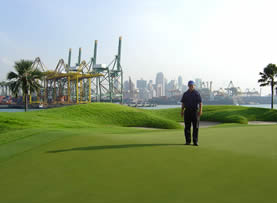
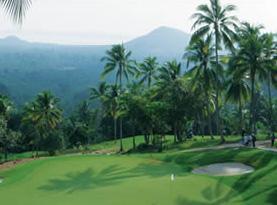
Sentosa Golf Club will be thrust into the international limelight when it stages next month’s Barclays Singapore Open, the richest national Open in Asia. In an exclusive article for Asian Golf Monthly, Quality Golf’s discusses how his team has been preparing the Serapong Course for its biggest assignment. Picture by Tharm Sook Wai.

Make no mistake. Offering record prize money of US$3 million, the Barclays Singapore Open at Sentosa Golf Club has announced itself as the Asian Tour’s ‘Major’ championship.

According to the course preparation brief issued by David Parkin, Tournament Director for the Asian Tour, come tournament week, from September 7-10, the Serapong Course must play at least as difficult as any other venue on the circuit, befitting its status as the region’s premier national Open.

To that end, the rough height programme commenced in early June under the watchful eye of Sentosa’s golf course director Sia Kuang Yiau. It will continue until roughs reach over 100 millimetres, making the course a true test of accuracy. By the time of the tournament, fairway corridors will be reduced to widths of 25 metres, which is standard for top-level championship golf.

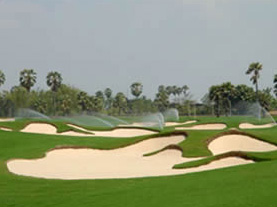
To ensure international standard tournament conditions, Quality Golf’s Tournament Preparations Team – headed by certified golf course superintendent Gregg Swanson (pictured above) – began operations in mid-June.

Given Swanson’s considerable experience in working with TifEagle greens and Zoysia fairways, we are aiming for the best conditions ever in Singapore, ramping up to tournament time.

Our main focus over the next six weeks will continue to be working closely with the Sentosa team, ensuring optimum health of the greens going into the tournament. Once we have confirmed that a good rooting structure is in place, we will begin to lower the heights of cut to provide the smoothness and desired speeds that tournament players are so demanding of.

We are fortunate that Sentosa’s newly renovated Tanjong Course opened in mid-July, affording us ample time to get in and carry out the necessary work on the Serapong Course. We are also pleased at the level of commitment that has been made by the Sentosa Leisure Group and the club’s tournament chairman, committees and members to provide us with the tools to perform.

With such substantial prize money on offer, and the inherent international attention that a tournament of this stature commands, we in the Courses Department have to perform to our very best.

Raising the standards and, more importantly, maintaining them requires a combination of precise cultural practices for greens, tees, fairways and roughs; perfect timing; and quick thinking to handle any unexpected conditions that Mother Nature may present.

The excitement of tournament preparations for events such as the Barclays Singapore Open is what those of us in the golf maintenance business live for! To see all your efforts, and those of your staff, peak for one week really presents a strong message both to the golfing public, and indeed to yourself, as to whether you have achieved the highest level in your career and can truly be considered a professional.

This article first appeared in the August issue of Asian Golf Monthly magazine.

Executive Director of Sentosa Golf Club, Robert Bird, subsequently added:
”To many people, the most important ingredient in the varied mix that goes into making a successful professional golf tournament is the conditioning of the course, and rightly so. This is the stage on which 144 top professional golfers are being asked to perform at their very best. We owe it to them to provide a superior playing surface as well as a stern test of their golfing skills. As such, it is incumbent upon Sentosa Golf Club, as proud hosts of this event, to ensure that our Serapong course is suitably prepared come September 7th. We have addressed this obligation by augmenting our existing course maintenance team with the experience and expertise of Quality Golf. Working alongside our Golf Course Director Sia Kuang Yiau, Quality Golf’s and Gregg Swanson have been focusing their attention on Serapong since the beginning of June. As a team they have been meticulous in planning and implementing programmes to address the various challenges that a task of this nature provides.”

SEAISLE 2000 GOES TEE-TO-GREEN

SEAISLE 2000 GOES TEE-TO-GREEN

SeaIsle 2000, originally marketed for golf greens and tees in salt-challenged environments, has proved to be well-suited for fairways and roughs, allowing it to be used effectively as a “wall to wall” golf turf. Sahara Golf Club in Kuwait and Nanea Golf Club in Hawaii both have 18-hole facilities planted totally in SeaIsle2000. Many high-end international and domestic courses have SeaIsle 2000 on greens and tees.

Golf course architects, superintendents and owners are now beginning to look at SeaIsle 2000 as a cost-effective alternative to some of the other paspalums on the market today. At a mowing height of 1/8-inch and with regular verticutting, light topdressing and periodic rolling, SeaIsle 2000 will deliver Stimpmeter readings of 10 feet or more. Mow it at 1/2” to 3/4” and it becomes a lush fairway. Roughs may be maintained at 1 to 2 inches, and penalty roughs at well over 2 inches.

As drinking water becomes scarcer, ocean water blends and recycled or effluent sources are becoming the only option for many golf courses. SeaIsle 2000 is a natural for such areas because of its high salt tolerance. While it requires superintendents to modify some of their management practices, SeaIsle 2000 pays dividends in reduced fertilizer, herbicide and water costs. It has gotten high marks in research trials for disease resistance as well as for the density and strength of its turf and its rapid recovery from normal wear and ball mark injuries.

Quality Golf is a licenced distributor for SeaIsle 2000 in Southeast Asia. If you are planning to build a new golf course or undertake a greens renovation in a coastal location or where soils and water have a high saline content, you should seriously consider selecting SeaIsle 2000. For more information and a highly competitive quote, please contact Phrnop Sarleepimon +668-191-93411 or phrnop@qgiinternational.com. You can also visit www.seaisle2000.com.

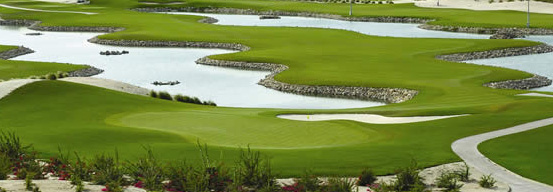
Photo: The Sahara Golf Club in Kuwait City shows off wall-to-wall SeaIsle 2000.

BREAKING NEW GROUND WITH CLUB MANAGEMENT VENTURE

BREAKING NEW GROUND WITH CLUB MANAGEMENT VENTURE

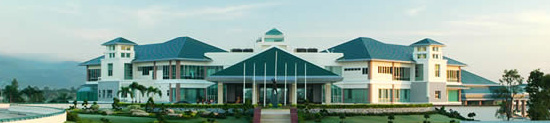
Quality Golf has signed its first club management contract, with Pattana Golf & Sports Resort in Chonburi Province. Located in the heart of Thailand’s Eastern Seaboard, within 1.5 hrs drive from Bangkok, this luxurious, modern Resort is surrounded by a scenic mountain range and offers the following facilities:

  • 9,000 sq. metre Clubhouse
    Restaurant serving Thai, Japanese, Chinese & European cuisine
  • 27 hole golf course
  • 222 rooms in Hotel, Mansion & private Villas
  • 2 spacious seminar / conference rooms & smaller function rooms
  • Impressive, free-standing Banquet & Convention Centre
  • Swimming Pool, Gym, Internet & Games Room
    Spa providing wide range of massages and treatments

“We are very pleased to appoint Quality Golf to manage our facility. We selected them because of the reputation that they have earned through impressive work around the region and we are confident that their knowledge and experience will significantly enhance the standards and performance of the Resort”, said Dr. Somporn Juangroongruangkit, President & Founder of Pattana Golf & Sports Resort.

“We greatly appreciate Dr. Somporn appointing us to manage her fabulous facility. We will harness our international experience and strong local knowledge to achieve her expectations”, said Pranop Saleepimol, Managing Director, Quality Golf.

AGREEMENTS SIGNED WITH SENTOSA GOLF CLUBAND AMATA SPRING COUNTRY CLUB

AGREEMENTS SIGNED WITH SENTOSA GOLF CLUB AND AMATA SPRING COUNTRY CLUB

”We are truly delighted to have formed agreements with two of the Region’s premier Clubs to provide maintenance consultancy services. By being selected to perform these assignments, I have truly reached the pinnacle of my career.” said Quality Golf .

”Sentosa Island and the golf club have visions and plans of being the ultimate destination resort in Asia, and they are most certainly on their way to achieving this intention. Gregg Swanson, Certified Golf Course Superintendent, has been proudly posted there full-time and I will assist the management in installing and implementing Quality Golf’s ‘Success System’, in setting the policies and procedures in the maintenance department and in installing a very effective training programme. Our first major task is to get the golf courses up to tournament standards, and we are well on course to reach this goal for the Barclays Singapore Open” said Quality Golf .

”I was very fortunate to have had the pleasure of working with Mr. Andrew Yau at Ria Bintan Resort from 2001-2003. Mr. Yau is completed committed to delivering what he has promised to the members of Amata Spring Country Club in creating a World Class Private Club. This Club is setting new standards and is developing a reputation as ‘The Tournament Course of Asia’’ said Quality Golf.

Quality Golf has been working side-by-side with the Superintendent, Cameron Thompson, whose day-to-day efforts have been able to ‘raise the bar’ as far as conditions are concerned. Amata Spring is one of the only ‘wall-to-wall’ paspalum golf courses in the Region, and Cameron is able to groom the turf to the highest quality playing conditions in Southeast Asia. Andrew is renowned for fast greens and these properly managed Sea Isle 2000 greens are putting consistently over 10 feet daily.

GREENS GRASSES FOR SOUTHEAST ASIA

GREENS GRASSES FOR SOUTHEAST ASIA

Background

Prior to the boom in golf course construction which started in the 1960s, the vast majority of greens in Southeast Asia were composed either of sand or indigenous grasses. With the ensuing surge in popularity of the sport, there was a demand for greens grasses that would provide a better quality of putting surface by both amateur and professional golfers alike.

The first generation of greens grasses were Bermudagrasses, including Tiffine, Tifgreen and Tifdwarf, the latter arriving in Southeast Asia in the late 1960s. These grasses were so named because of their origin in Tifton, Georgia, USA.

Problems

Tifdwarf and other members of this family of turfgrasses have a severe tendency to either become contaminated with off-type plants or to mutate and change their characteristics. This problem is accentuated when trying to achieve increased green speeds. In 1980, Dr. Wayne Hanna, a plant geneticist, made a collection of over 70 different plant types taken from putting greens that originated from these first generation grasses. Some were more aggressive than Tifdwarf, some weaker. Some plots were started from one single stolon and even these plots had mutated. The plants that occurred in these fields were ‘new mutation’ events, whereby the plants replicate themselves in a continuing stream of variant plants. There is no way to prevent the occurrence of contaminates in these varieties. From the existing data available, Tifdwarf and these first generation greens grasses could be considered to be genetically unstable. One particular problem arises when pin placements are changed, increasing the likelihood that contaminates will be spread across the green. Thus, within a few years, the entire green is covered with spots. Most of the types that occur on greens have varying density, greater thatch, increased susceptibility to disease, an inability to withstand vertical mowing and severe grain problems.

The Way Forward

There is no easy solution for the off-type problem in the Tifdwarf family of grasses. It cannot be prevented and the best option for a golf course is to plan on re-grassing every 5-10 years and to obtain new planting material from a Nursery certified by the International Turfgrass Genetic Assurance Programme (ITGAP) that has variety pure planting stock. These nurseries are becoming more difficult to find especially with the introduction of the second generation of greens grasses, including Champion, Mini Verde, and TifEagle. Champion and Mini Verde are also off-types of Tifdwarf and will most likely change their genetics in the future.

TifEagle, however, was released by Dr. Hanna in the spring of 1998 and is the only variety that has different genetics than the Tifdwarf/Tifgreen family. The reason for this is that it has been genetically modified through cobalt radiation. To date, the number of off-types in TifEagle production fields have been limited and there is no documentation of a “mutation off-type” in a TifEagle green. Some of these greens are now over 6 years old and are at the stage where off-types would be very obvious in Tifdwarf. There is thus a strong case for golf courses with contaminated Tifdwarf on their greens to change to TifEagle.

Naturally this will require some management changes, but the improvement in putting quality should more than offset the increased management inputs. TifEagle can be cut to a height of 2.5-4 mms and with proper management can produce green speeds of between 10.5-11 feet.

Aside from the Bermudagrass ultradwarfs, as TifEagle and the second generation grasses are often referred to, there are also some new varieties of seashore paspalum grasses that are ideally suited to the warmer climate of Southeast Asia and which can produce an equally outstanding quality of putting surface, most specifically SeaIsle 2000.

SeaIsle 2000 was developed by plant geneticist Dr. R.R. Duncan at the University of Georgia ‘s Griffin Experiment Station. Regular verti-cutting, light top-dressing and periodic rolling will deliver stimpmeter readings of between 9-10 feet. It is a grass that thrives on salt and poor quality water. As drinking water becomes more scarce, ocean water and other low-quality alternative sources are going to be the only option for many golf courses. Whilst requiring Superintendents to alter some of their management practices, SeaIsle 2000 will pay back dividends in reduced fertilizer, herbicide and recycled water costs.

It has received much acclaim in research trials in the USA for its disease resistance, turf quality, density and strength, its playability and rapid recovery from normal wear and tear. Its rich, dark green colour also makes for a highly aesthetic appearance.

Both TifEagle and SeaIsle 2000 are patented greens grasses, ensuring their long-term genetic purity and stability and protecting the investment of Golf Course Owners. Further information on can be found at www.tifeagle.com and www.seaisle2000.com. Ultimately though, the ‘perfect grass’ does not exist – it all centres around sound management practice.

TifEagle and SeaIsle 2000 are exclusively licenced and distributed in Thailand and SE Asia by Quality Golf International Products Co., Ltd from their ITGAP certified Nurseries.

Superintendent Speak

Contamination – the unwanted introduction or appearance of another genotype
Mutation – any spontaneous change in the DNA that arises, survives and becomes a permanent part of the organism’s genetic background.
Off-type – an individual grass plant which does not express the standard expected appearance due to changes in the genetic background, response to the environment, or both. Off-types are therefore either mutations or contaminants.
Stolon – an above ground creeping stem that can produce roots and shoots.
Thatch – organic layer of dead and living stems, shoots and roots of grasses that grow between the turf canopy and the soil

TGCA AND QUALITY GOLF FORM EDUCATIONAL PARTNERSHIP

TGCA AND QUALITY GOLF FORM EDUCATIONAL PARTNERSHIP

The Thai Golf Course Association (TGCA) and Quality Golf have formed a partnership to organise a series of educational seminars for Golf Course Superintendents in Thailand throughout 2005.

The seminars will take place on a monthly basis and are specifically designed to support Superintendents with the maintenance practices of their golf course facilities. Guest speakers will be brought in from the USA, UK and Hong Kong to provide knowledge and insight on key topic areas. The series will begin on Wednesday 23 rd March 2005 at Lakewood Country Club where John Westerdahl from Lebanon Turf, USA, will talk about Plant Nutrition and Fertilizers.

“The primary objective of the TGCA is to support its Members in upholding the quality levels of their golf course facilities into which their Owners have invested a considerable amount of money. With the support of Quality Golf and the expertise of their guest speakers, this partnership offers an exceptional opportunity for the Superintendents to enhance their knowledge and skills. We encourage and invite all Owners to request their Superintendents to attend the seminars”, said Khun Prayuth Mahagitsiri, TGCA Chairman

“It is a great honour to be working with the TGCA in offering educational opportunities to the Golf Course Superintendents in Thailand . As the country continues to move towards a knowledge-based society, I think it is most important that we help our colleagues to further develop themselves and to protect the assets of their employers”, said Quality Golf.

THE ROLE OF THE CONSULTANT

THE ROLE OF THE CONSULTANT

The Golf Course industry is extremely diverse, and requires specialized knowledge in a vast array of professions. In the management of a golf course, the Owners and their Staff face issues daily in diagnosing and solving agronomic problems and prioritizing maintenance, irrigation, drainage and nutritional needs for the turf. In many cases, they also need to plan and confirm the need for capital projects, capital equipment needs, lake and water resource management, tree management, architecture and facility design and safety.

Finding personnel that are qualified as experts in each of these fields is an unreasonable and potentially daunting task, especially since the Asian Golf Industry has to date not been fortunate enough to acquire sufficient support from local suppliers in the Region to fund and facilitate turf schools and continuing education.

Working with a Consultant

Consultants are very often called in after a problem has occurred, but in the long-run they could be used more effectively if meetings were scheduled on a regular basis as more of a preventative measure. Regular site visits enable a Consultant to understand the issues at a facility better, and to potentially be able to forecast major problems before they arise. This also allows the facility to communicate with the Consultant by e-mail, so that they can answer questions or, for example, provide a diagnosis by viewing just a few digital images sent by the Club. Regular visits also provide a written historical record of the progress or decline of a facility that can be used to plan additional resources and recommend improvements where required.

Choosing the right Consultant

Local and regional knowledge is a most beneficial attribute when selecting a Consultant. More importantly, the Consultant must possess a high level of integrity and credibility if their recommendations are to be taken seriously. They must always act in the best interest of the Owners, Members, Club and Facility. Be sure to check their references and specific knowledge closely when selecting the right candidate for the task.

Most Consultants choose to work with the Golf Course Superintendent in a positive aspect, always looking for ways to improve the facility with the resources available. The retaining of a Consultant should not be viewed as a threat, but rather as an educational experience. Gaining knowledge and being able to control all aspects of the golf course site goes a long way towards meeting the responsibility that is granted to a Golf Course Superintendent. Consultants can potentially fill the knowledge and experience gap as a continually-evolving industry presents new challenges to the profession.

A good Consultant will provide valuable recommendations that may be required to improve the course conditions so as to meet the expectations of its Members. It is then up to the Owners, the Committee and / or Membership to decide whether or not to provide the resources that may be required to implement improvement programmes and practices.

WATER MANAGEMENT

WATER MANAGEMENT

With the dramatic changes in climate across the Region caused by planetary development issues, Golf Course Owners, Managers and Superintendents would be wise to take a serious look at how they are managing their water resources. Knowledge of the data relevant for water management at their facilities will go a long way towards protecting their golf course asset from regulation by government agencies during times of drought.

The art and science of irrigation (defined by Webster’s as “to water by means of canals, lakes or ditches through pipes and / or sprinklers” ) is constantly evolving to handle these challenges through increased research and state-of-the art irrigation systems. However, in certain areas of Southeast Asia where water is still a cheap and readily available resource, over-watering occurs all too often. Golf course turfgrass, especially greens grass, is often damaged by an excessive amount of water, in fact more so than by drought stress.

Golfers themselves sometimes add to the confusion of the management’s decision as to how much water should be applied due to their demand for “soft”, holding greens. By contrast, the European and US Touring Professionals would rather have firmer, dry greens which separate the true ball-strikers from the ‘power players’. The PGA European Tour’s guidelines state that “a good green will be firm – not hard – and will accept a well struck iron shot and reject a poorly struck approach shot or a shot played from the rough”.

Under hot weather conditions, there is often a tendency to apply more, rather than less, water so as to be sure that drought stress does not occur. This can promote soft conditions and places additional stress on the turf. When turfgrass is over-watered, soil pore space that is normally filled with air is then filled with water, and root decline can occur due to a lack of oxygen. Roots do not grow deeper in search of water. By contrast, soils that have adequate moisture and oxygen levels promote deeper root development and more root mass. Water also conducts heat, dangerously increasing soil temperatures under hot, saturated conditions.

Fine turf performs better when efforts are made to promote and maintain drier conditions.

Ways to assess the watering needs for turfgrass vary from high tech computers and evapo-transpiration devices to simple visual assessments of the water and moisture status of both the turf and the soil by foot-printing techniques and through the visible wilting of grass leaves. If you simply step on the green or turf area being checked and the turf does not have enough moisture in the leaf for it to bounce back or recover, instead it leaves a stressed looking footprint on the turf, then the turf lacks water. Soil moisture should be checked with a soil probe to a 6-8 inch depth. By experience, the Golf Course Superintendent should identify these indicator sites where turfgrass water stress first occurs.

Application of water to a turf area should be determined by the Superintendent based on (a) environmental conditions such as rainfall, sunlight and / or cloudy or shaded conditions, (b) replacing water that was utilized by the turf in the root zone, and (c) watering in fertilizers and / or insecticides.

The appropriate level of water to apply should be equivalent to that removed from the soil since the last irrigation or rainfall. The actual amount of water applied also depends on the water retention characteristics of the soil.

When and how much to irrigate is one of the most difficult decisions in golf course turfgrass culture. Unfortunately, irrigation practices and systems are too often misunderstood and misused. Many golfers tend to rate the golf course conditions on how green and lush the turf is and a green colour is expected at all times. However, such a green turf is not the most healthy or playable.

Water is one of the planet’s most precious resources. Both golfers and Club Management should make a concerted effort to learn how to understand and manage it for the greater good of all areas involved.

QUALITY GOLF PREPARES TO HOST A TRIO OF TOURNAMENTS

QUALITY GOLF PREPARES TO HOST A TRIO OF TOURNAMENTS

Quality Golf is delighted to announce that its three major clients in Asia will all be hosting professional tournaments in the second half of 2005.

Santiburi Samui Country Club, on Koh Samui, is set to welcome the Bangkok Airways Open, a US$200,000 Asian Tour event, from 13th -16th October; Thai Country Club will host the prestigious Volvo Masters of Asia, the US$600,000 Asian Tour Championship for its Top 60 players, from 8th – 11th December; and the Omega Hong Kong Open, a US$1m event co-sanctioned by the PGA European Tour and Asian Tour, will again be held at The Hong Kong Golf Club from 1st – 4th December.

“Hosting a professional tournament is an ideal way to showcase any golf facility as it attracts significant public interest, both in terms of attendance and the considerable television and print media coverage it creates. We are honoured by these exciting announcements from our clients and greatly look forward to preparing their facilities to international standards that will present a challenging examination for some of the world’s leading professional golfers”, said Qualtiy Golf.


“For Santiburi Samui Country Club, it will be the first time that the course has held such a high profile event. Further to its recent 5 th place ranking amongst golf courses in Thailand by the readers of Asian Golf Monthly, the event will firmly place the course in the limelight in Southeast Asia due to its spectacular design on such dramatic terrain. For Thai Country Club, it reaffirms their unparalleled commitment to the 5-star golf industry and represents an exceptional opportunity to unveil the greens renovation programme that we have undertaken, re-grassing all 18 greens with state-of-the-art TifEagle bermudagrass. For The Hong Kong Golf Club, it will be the 47 th consecutive staging of the event, for which we have undertaken an extensive amount of minor renovations to improve the quality and playability level of the course for both the members and professional golfers” , said Qualtiy Golf.

AN OPEN INVITATION

AN OPEN INVITATION

From 13th-16th October, one of Asia’s newest and most spectacular courses, Santiburi Samui Country Club, will host the US$200,000 Bangkok Airways Open on the burgeoning Asian Tour. The event will place the course, and indeed the idyllic tropical island of Koh Samui, firmly in the regional spotlight and represents a fitting accolade to its outstandingly challenging design and pristine conditioning.

HISTORY IN THE SHAPING

In January last year, golfing history was quite literally shaped as the first ever course on Koh Samui was opened for play. The 6,932 yard layout of Santiburi Samui Country Club stretches in an east-west direction, blending harmoniously with the natural environment and incorporating staggering elevation changes ranging from 30-190 metres above sea level. Over a period of 24 months, 18 championship holes were quite literally carved from the hinterland of granite and limestone hills. Narrow fairways, lined with coconut palms and sharp drop-offs, coupled with large, undulating green complexes, make for an extremely challenging golfing experience. This is, however, counter-balanced by the highly aesthetic nature of the course, with 14 holes offering truly stunning panoramic vistas of the turquoise-coloured Gulf of Thailand and the golden beaches that adorn the island’s northern coastline below. Numerous natural waterfalls and creeks meander through the 450 Rai (72 Hectare) site, adding to its lushness and beauty. State-of-the-art TifEagle Bermudagrass has been used on the greens, Salam Seashore Paspalum grass on the fairways and Bahia grass in the roughs.

ATTAINING INTERNATIONAL STANDARDS


Santiburi Samui Country Club was designed and built, in 24 months, by Quality Golf, who are also responsible for turn-key maintenance of the course.

“We are delighted to have had the opportunity to work with Khun Santi Bhirom Bhakdi, whose vision, as the Owner, greatly supported us in making this magnificent project become a reality”, “Hosting a professional tournament is an ideal way to promote any golf facility and we are honoured by the decision of Bangkok Airways to select Santiburi Samui as the venue for their event. We greatly look forward to preparing our client’s facility to international standards that will present a challenging examination for the Region’s leading professional golfers”, said Quality Golf.

In February this year, the Club’s quality level reached 81%, as measured by our unique Success System, which assigns values to every element of the golf course, indicating that it has attained a level of playing conditions that is consistent with the highest of international standards, and this after only its first full year of operation.

As the Bangkok Airways Open brings the course to the attention of the Region’s golfing community through television and print media coverage, Santiburi Samui Country Club is set to become a highly desirable new destination for discerning golfers, adding significantly to the island’s current level of 870,000 annual visitors. With Bangkok Airways offering direct flights from Singapore 5 times per week, and now flights from Hong Kong 3 times per week, there has never been a better time to explore and enjoy the unique golfing challenge of Santiburi Samui. If there was ever a must play course in the Region, this is surely it!